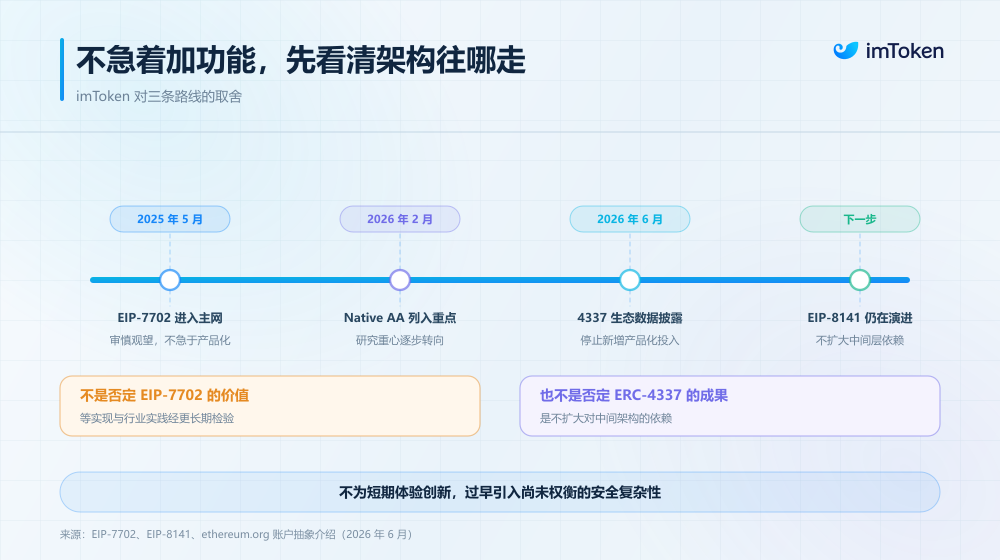
In an article published on November 21, 2026, imToken set out its approach to Ethereum account abstraction: remain cautious about broadly introducing EIP-7702 into its wallet, stop new ERC-4337 product-development investment, and gradually shift research toward native account abstraction. That is a product decision by imToken, not a change to Ethereum’s protocol roadmap.
Why programmable accounts change the security question
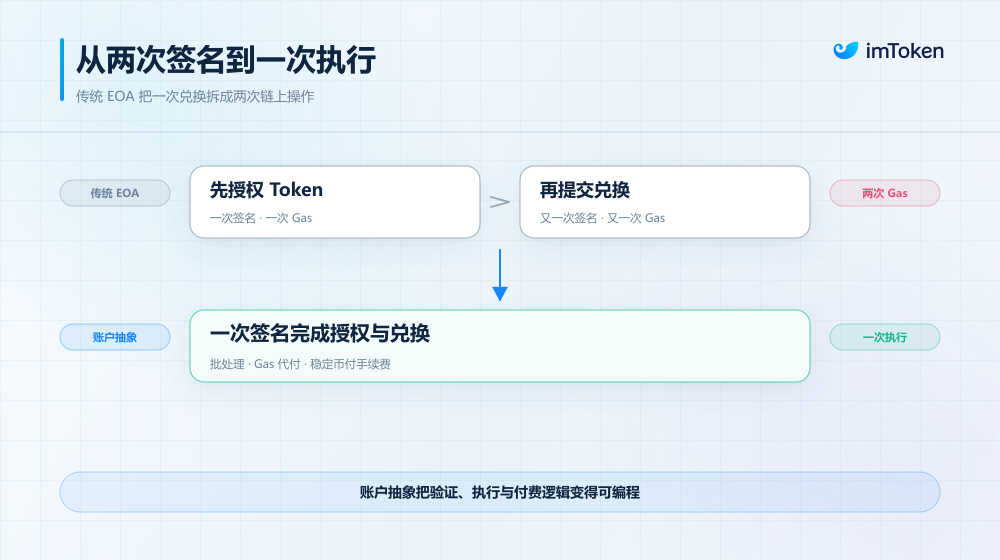
A traditional externally owned account (EOA) is controlled by a private key. Account abstraction aims to make validation, execution and fee payment more programmable, enabling features such as batched actions, sponsored fees and more flexible permissions. imToken argues that these conveniences also make it harder for users to understand what a signature authorizes.
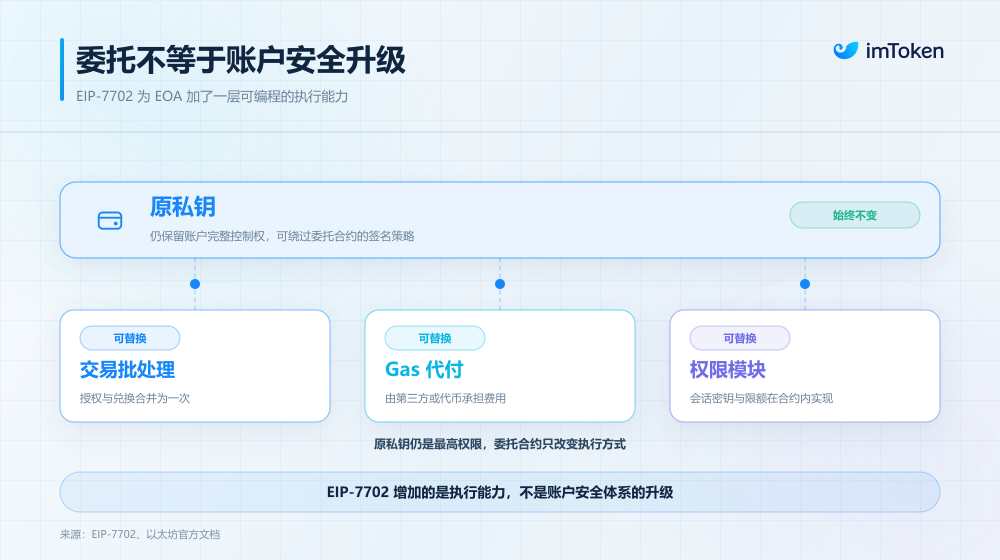
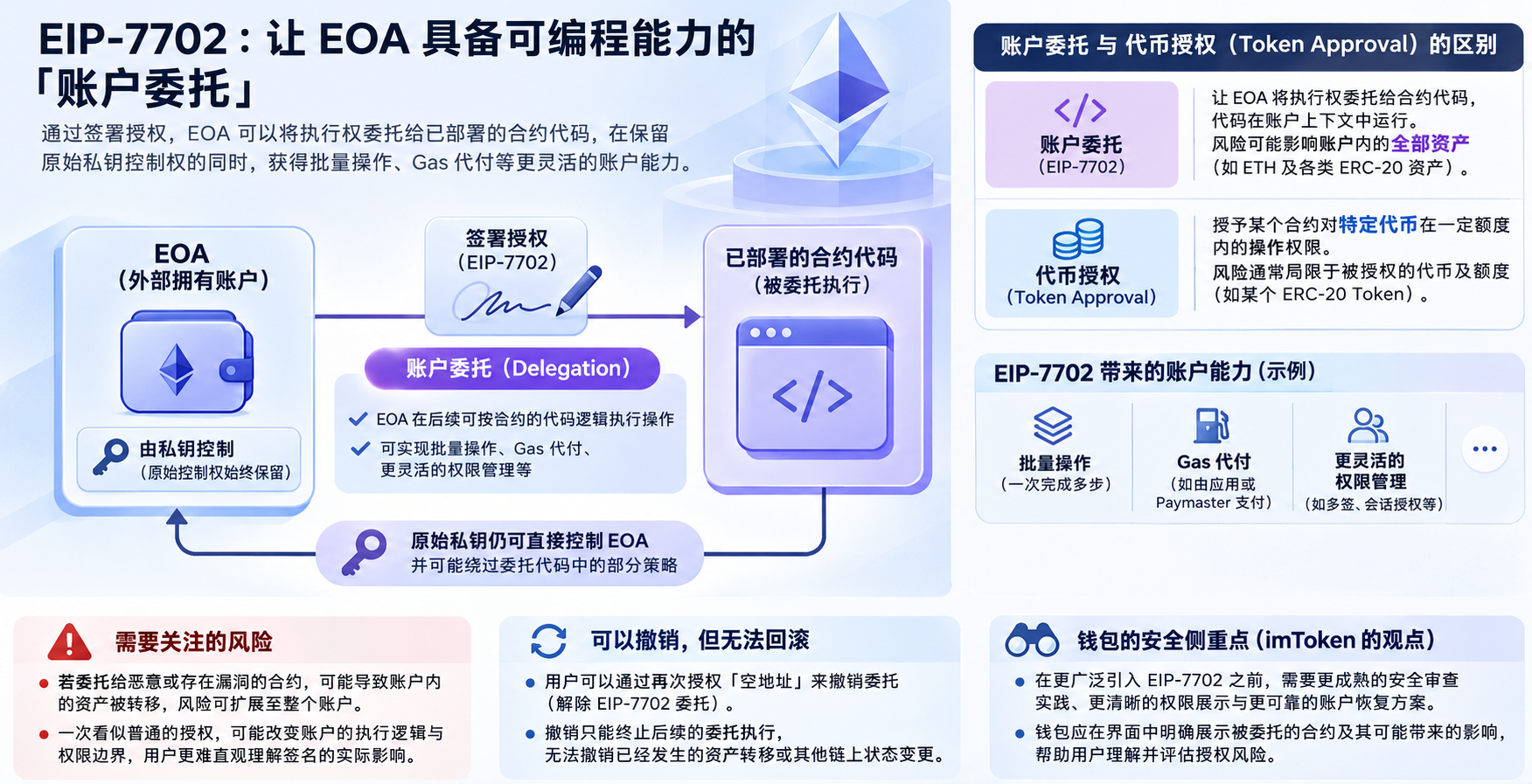
EIP-7702 is already on Ethereum mainnet. It lets an EOA delegate execution to deployed contract code through a signed authorization. That can provide capabilities such as batching, but imToken warns that delegation to malicious or vulnerable code could put assets across the account at risk—not just a particular token approval. The original private key still controls the EOA and may bypass some policies in delegated code. A user can revoke delegation by authorizing the empty address, but revocation cannot undo transfers or other onchain changes that have already occurred.
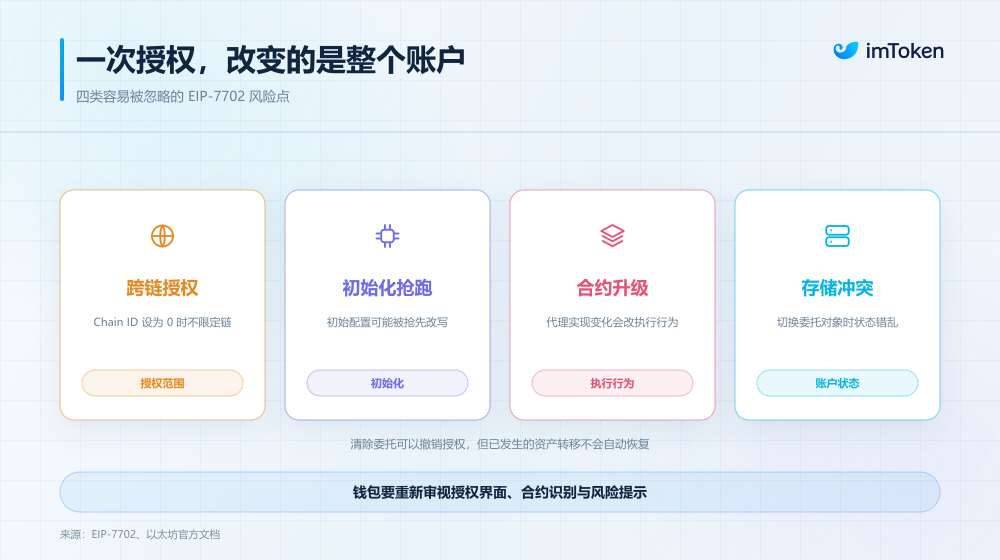
imToken says wallet interfaces therefore need to make the delegated contract and its implications clear. It is waiting for more mature security-review practices, permission displays and recovery approaches before broadly introducing EIP-7702 into its products.
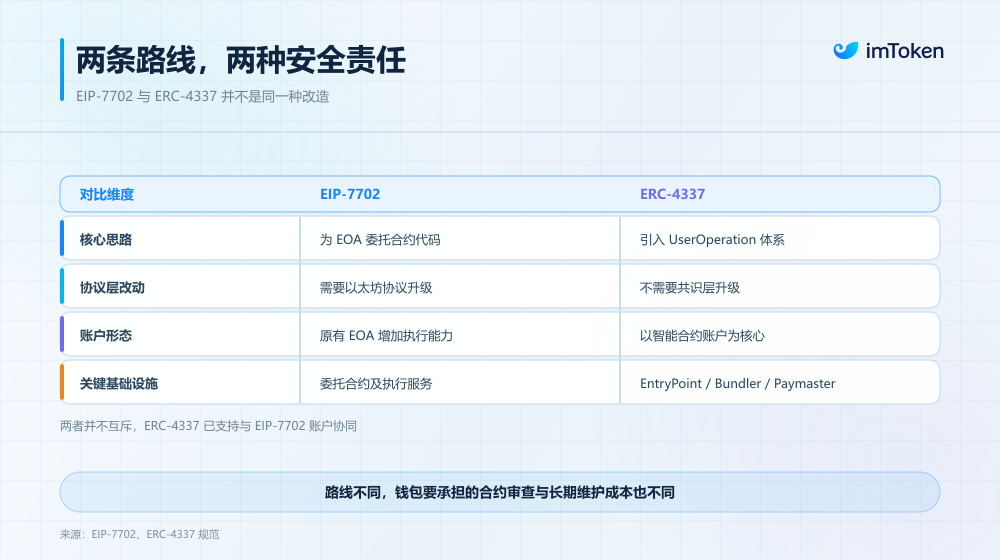
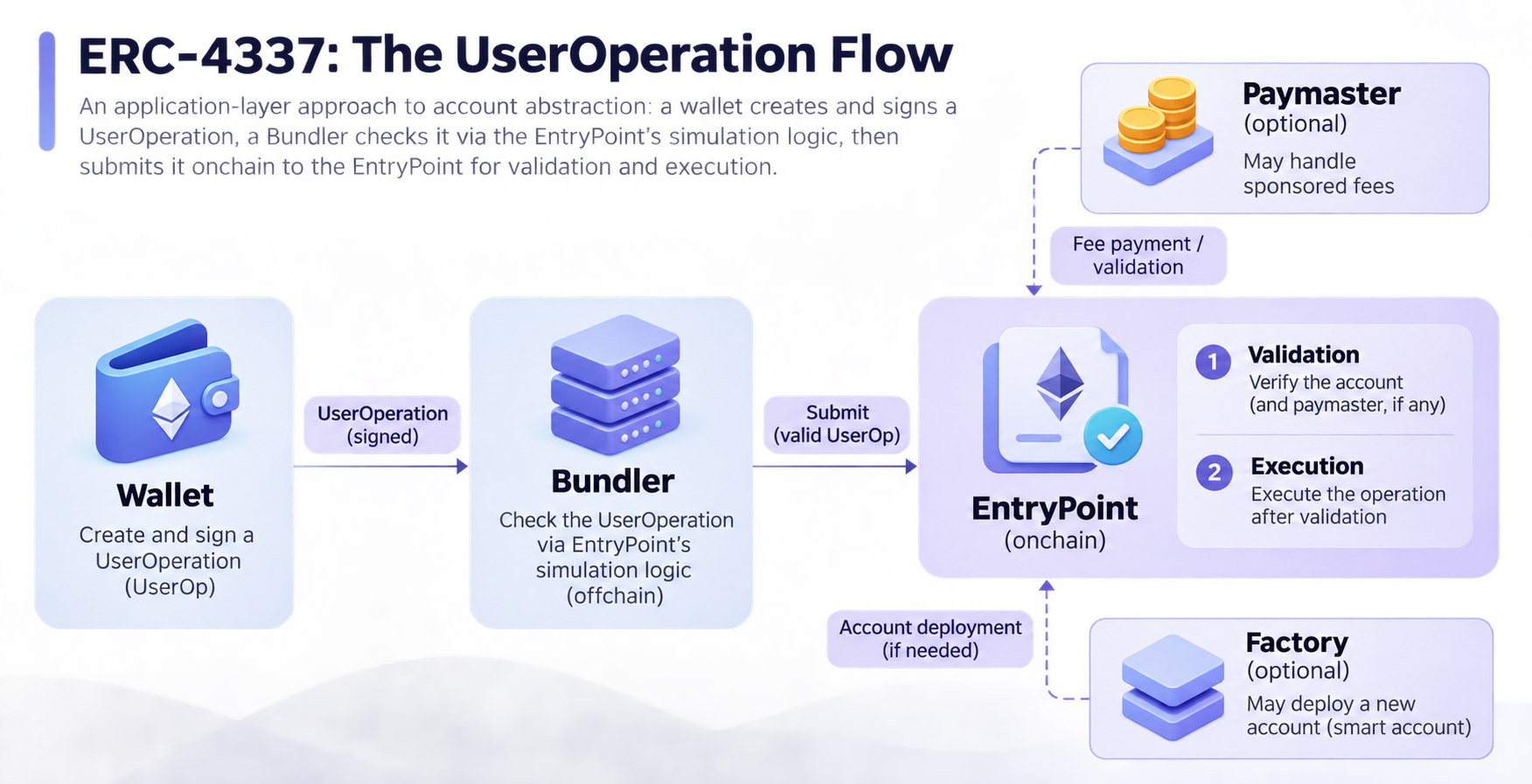
ERC-4337 takes a different route: it supports smart accounts through an application-layer process rather than adding functionality to an existing EOA. A wallet creates and signs a UserOperation; a Bundler checks it using the EntryPoint’s simulation logic, then submits it to the onchain EntryPoint for validation and execution. A Paymaster may handle sponsored fees, while a Factory may deploy a new account. imToken says those components, along with account code and EntryPoint versions, create ongoing compatibility and maintenance obligations. The two approaches are not mutually exclusive: ERC-4337 has added support for EIP-7702 compatibility.
Native AA remains a roadmap direction
According to imToken, the Ethereum Foundation identified native account abstraction as part of its “Improve UX” work in February 2026. The longer-term aim described in the article is to make smart-contract wallets a default account form while reducing reliance on infrastructure such as Bundlers and Relayers.
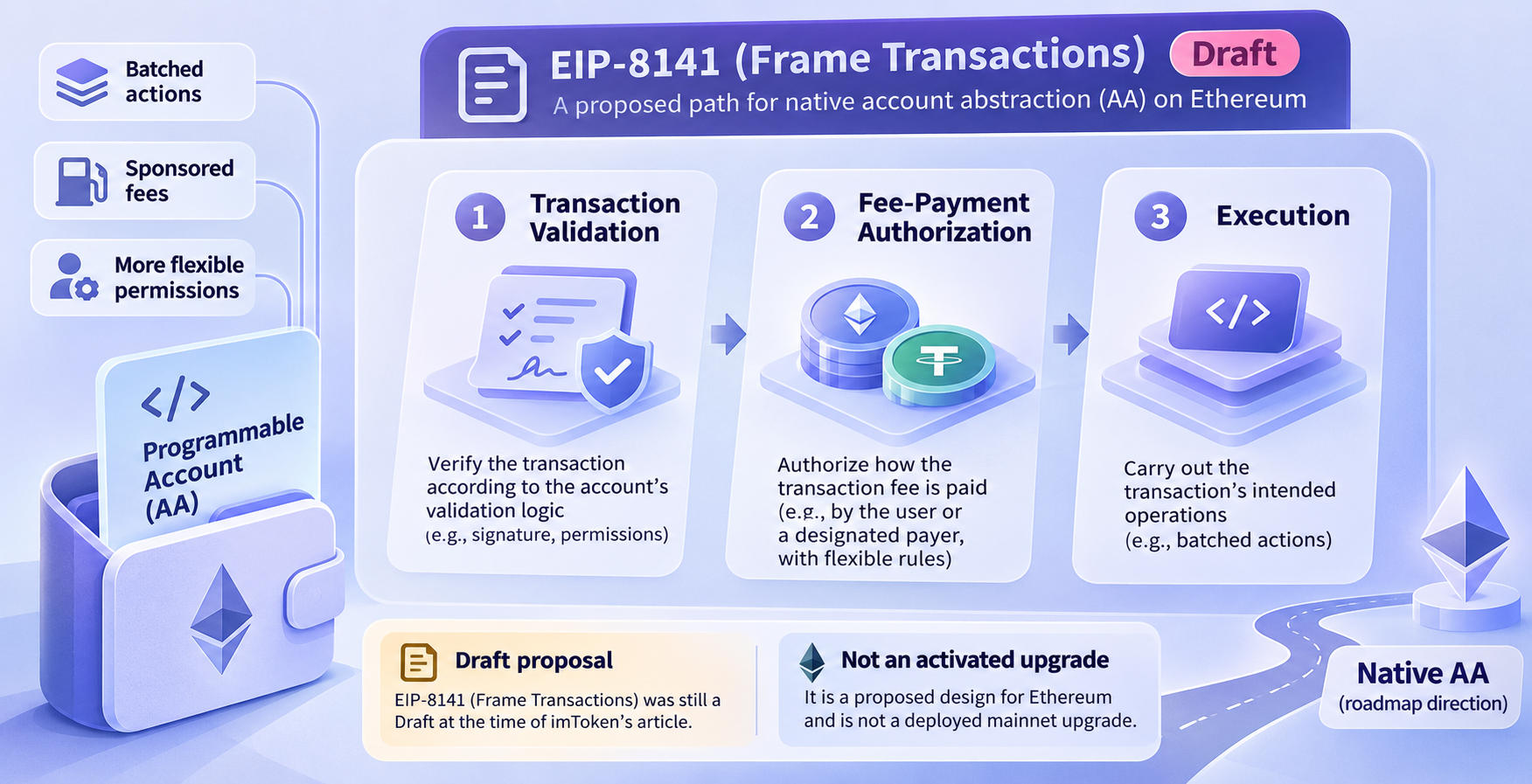
EIP-8141, or Frame Transactions, is one proposed path. It seeks to separate transaction validation, fee-payment authorization and execution into stages. It was still a Draft at the time of imToken’s article, not a deployed upgrade. imToken also cautions that native support would not eliminate the need to audit account validation code or test new fee and transaction mechanisms.
For imToken, the decision is to avoid expanding its ERC-4337 product architecture while it studies that longer-term direction. The company does not present the move as a rejection of ERC-4337’s technical value, and it does not claim that native account abstraction is ready for users.