As reported on November 18, 2026, Aave Labs’ report covering the second and third quarters of 2026 described a broader role for the team behind the lending protocol: maintaining core infrastructure while building new ways for users, institutions and other operators to access Aave. The expansion came with substantial costs, and deposit growth did not translate into higher quarterly protocol revenue.
A larger operating role
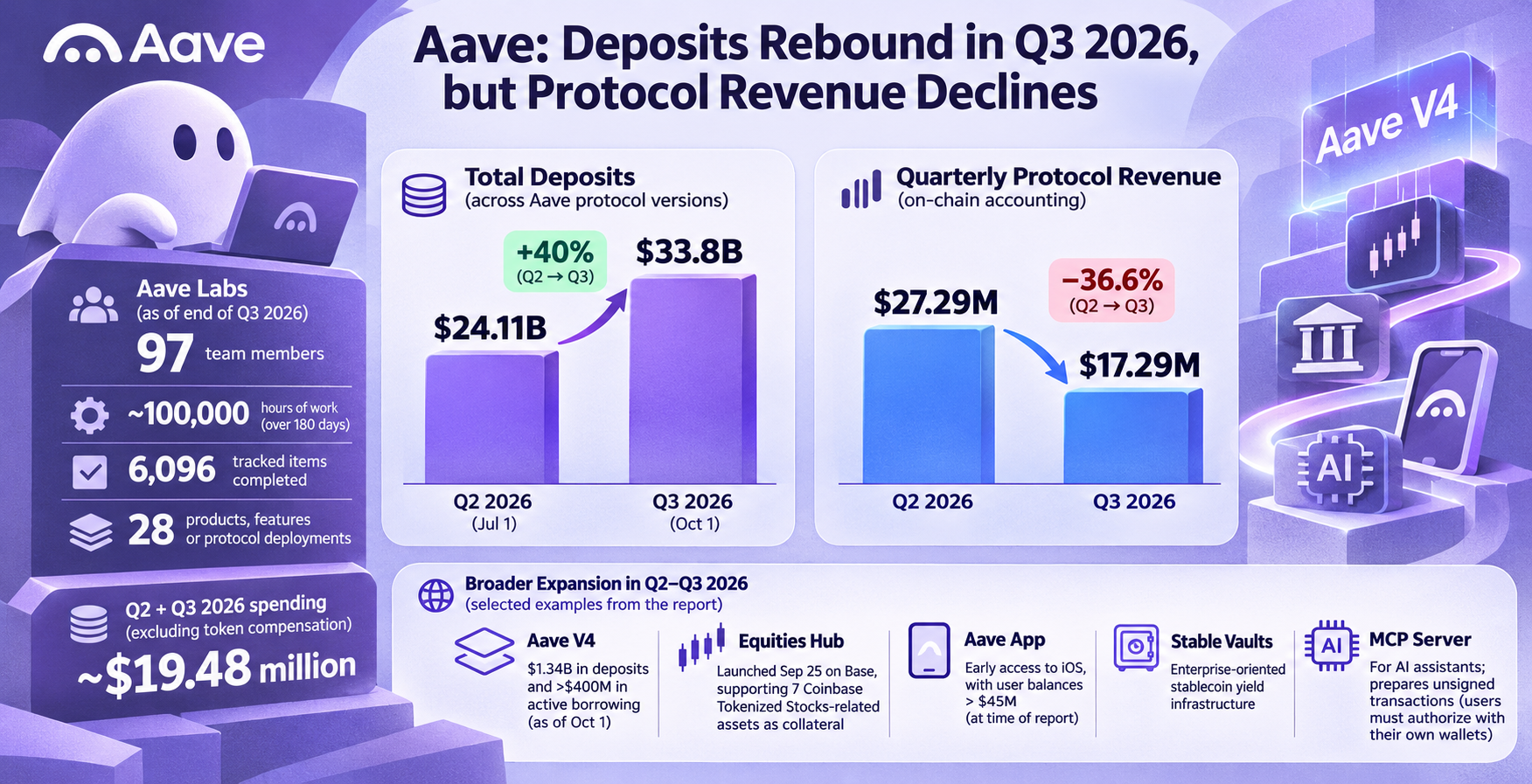
Aave Labs reported 97 team members at the end of the third quarter. Over 180 days, it recorded approximately 100,000 hours of work, completed 6,096 tracked items and launched 28 products, features or protocol deployments. Its second- and third-quarter spending totaled about $19.48 million, excluding token compensation; that figure therefore does not represent its full operating cost.
In the second quarter, Aave Labs took over roughly 40 technical and support functions previously handled by BGD Labs and the Aave Chan Initiative, including contract maintenance, security response and code for executing governance proposals. Aave DAO also approved the Aave Will Win Framework in April 2026. Under its stated terms, revenue from covered Aave-branded products flows to the DAO treasury after specified external partner shares, rebates, subsidies and direct user incentives; development and routine operating expenses are not among the permitted deductions.
Deposits recovered, but revenue fell
Across Aave protocol versions, total deposits rose from $24.11 billion on July 1 to $33.8 billion on October 1, an increase of about 40%. That was a recovery from the second-quarter decline: deposits had stood at $43.92 billion on April 1. Aave Labs attributed that earlier drop primarily to the rsETH cross-chain bridge security incident and a broader DeFi market contraction.
The April 18 rsETH incident did not involve a breach of Aave’s own smart contracts, but an attacker used improperly obtained rsETH as collateral to borrow assets from Aave V3, creating exposure for the protocol. Following recovery steps involving Aave Labs and other service providers, rsETH asset backing was restored on May 26 and the affected Aave markets resumed normal operation.
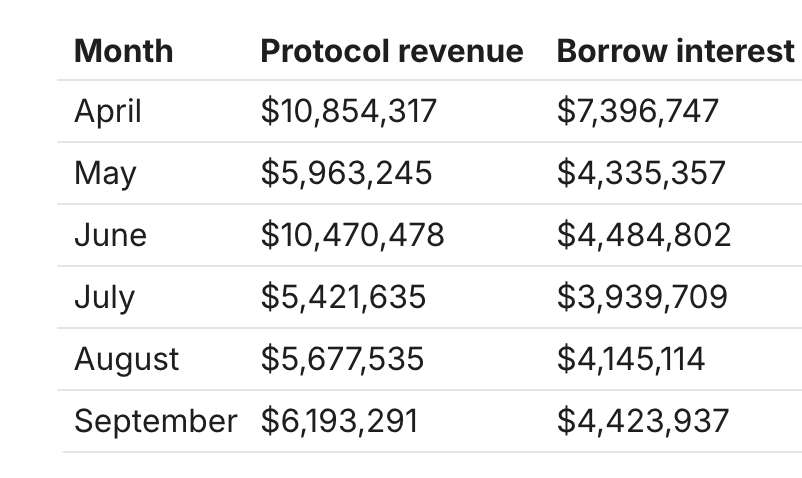
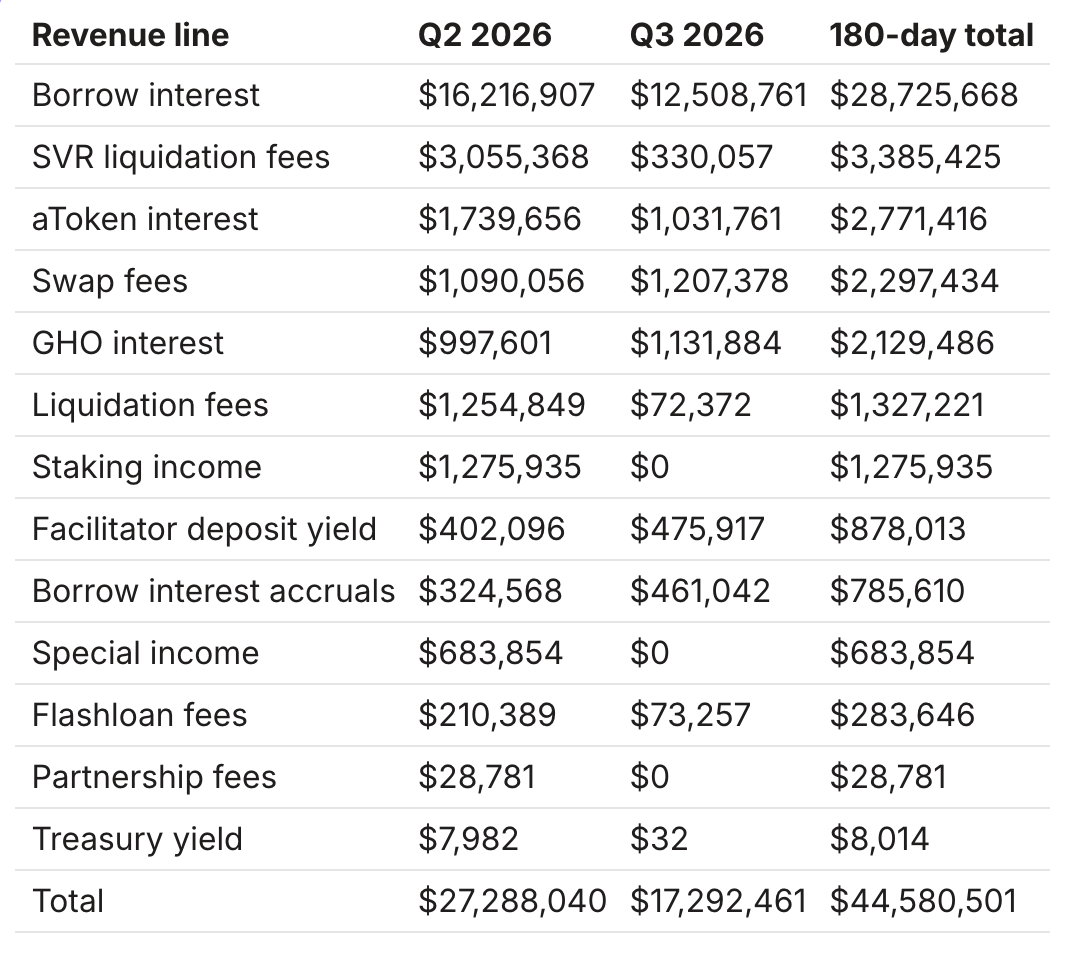
Under Aave Labs’ on-chain accounting, protocol revenue fell from about $27.29 million in the second quarter to $17.29 million in the third—a decline of roughly 36.6%—despite the deposit rebound. Borrowing-interest revenue declined, while liquidation-related fees that had boosted the second quarter fell sharply. More deposits provide lending capacity, but do not by themselves guarantee borrowing or revenue.
Where V4 is being used
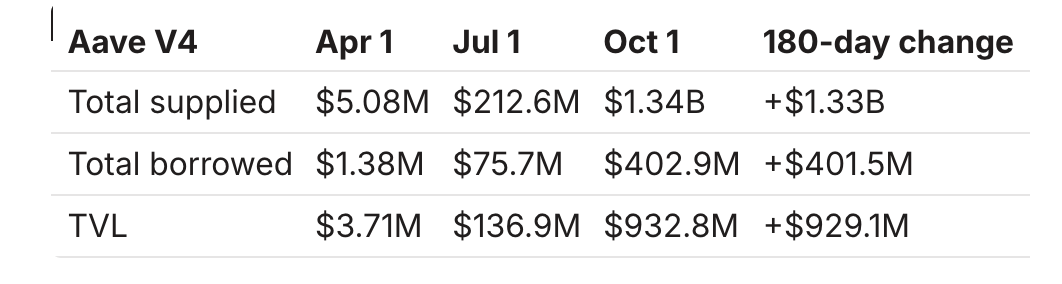
Aave V4 launched in late March 2026. By October 1, it had $1.34 billion in deposits and more than $400 million in active borrowing, according to the report. Its expansion included a September 25 Equities Hub on Base supporting seven Coinbase Tokenized Stocks-related assets as collateral for eligible users.
Other arrangements have different custody and governance boundaries. A September 15 proposal, Custodied Collateral Lending, envisaged institutions borrowing stablecoins against assets held at Anchorage, with balance information synchronized on-chain through Chainlink CustodySync. It was a proposed arrangement, not a reported activation. Separately, EtherFi moved the credit backend for EtherFi Cash to a dedicated Aave V4 instance on Optimism in August. EtherFi manages that instance itself and shares some revenue with Aave DAO; it is not a DAO-managed market.
Aave Labs also reported early access to its iOS Aave App, enterprise-oriented Stable Vaults and an MCP Server for AI assistants. The MCP Server prepares unsigned transactions rather than taking custody of funds; users must authorize transactions with their own wallets. The report did not disclose user, transaction or revenue figures attributable to the MCP Server, so its commercial effect remains unestablished.