
More than $600 million of the $6.3 billion stolen from Binance had moved through THORChain, Reuters reported on November 26, 2026. The FBI had already published wallet addresses it attributed to the North Korean attackers and asked crypto service providers, including THORChain’s node operators, to block the funds. TRM Labs estimated that the transfers may have generated about $1 million in fees for the cross-chain swap protocol.
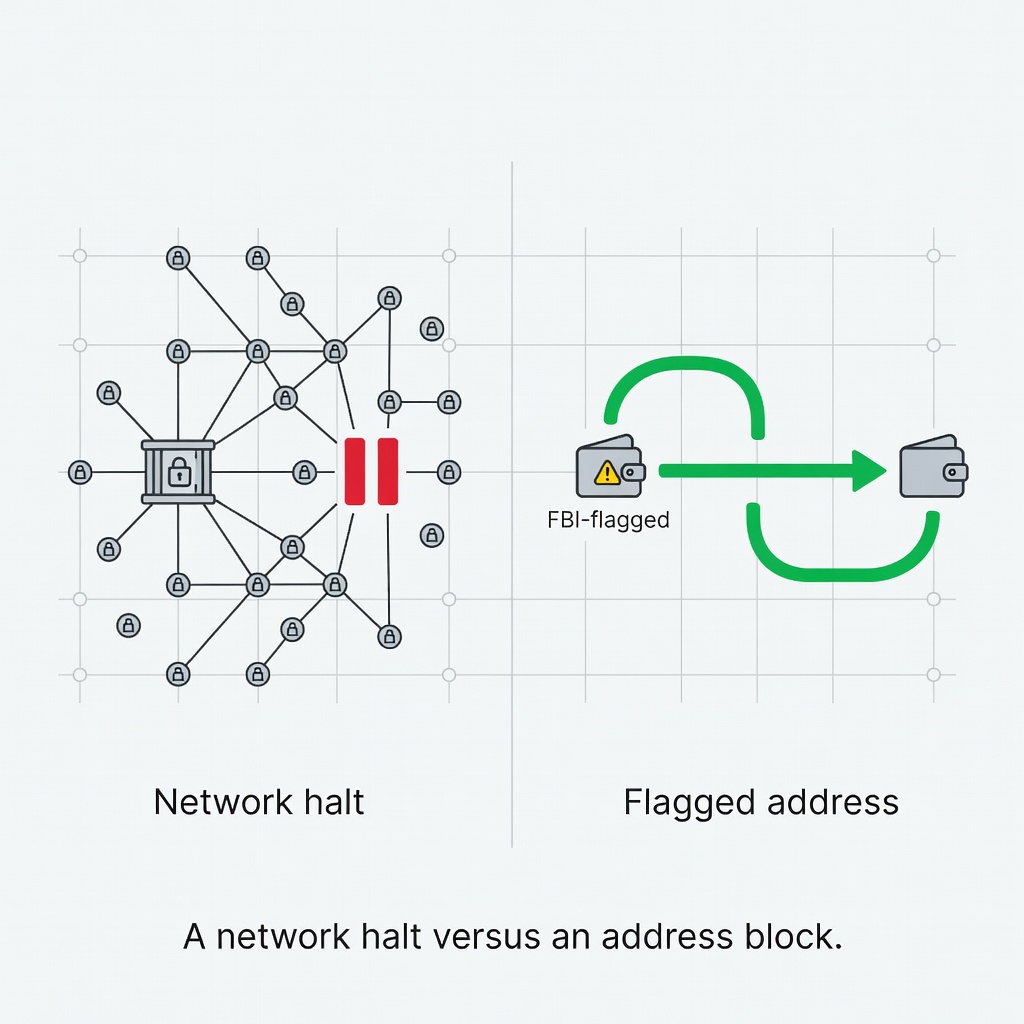
Writing on November 27, 2026, at 16:32 UTC+8, Odaily’s Golem contrasted THORChain’s decision not to block the transfers with its five-week shutdown after a theft from one of its own vaults. The dispute turns on two different forms of intervention: stopping a network when its signing system fails, and deciding which transactions an otherwise functioning network should refuse.
A network halt versus an address block
In May 2026, an attacker exploited a flaw in the GG20 threshold-signature mechanism used by a THORChain Asgard vault, bypassing the normal signing process and taking about $10.7 million. THORChain’s automated solvency checks detected the discrepancy and suspended trading and signing across several chains. Node operators and the community coordinated a network-wide halt within about two hours. The network remained offline for five weeks.
THORChain took a different position in September, when it declined to help Bitget freeze stolen assets, and again when it left the FBI-identified Binance addresses unblocked. In a video response, co-founder Chad Barraford said 98% of THORChain transactions served users’ personal financial freedom. Shutting down the protocol, he argued, would only send the attackers elsewhere.
Golem argued that THORChain was willing to intervene to protect its own vaults but not to stop identified stolen funds. The commentary questioned whether fee income also influenced that choice; it did not establish a financial motive or allege that THORChain directly participated in the laundering.
The fee figures from earlier thefts vary in scope. After the $1.5 billion Bybit theft in 2025, more than 85% of the unfrozen funds, about $1.2 billion, went through THORChain. On-chain analysts estimated the protocol earned $10 million to $12 million in fees over ten days. After the roughly $387 million Bitget theft in 2026, stolen funds again moved through THORChain. The protocol processed about $1.38 billion in total trading volume over the relevant days, which accounted for most of that month’s revenue. That volume was not a measure of stolen funds.
Polygon considered changing balances by hard fork
In early November, Polymarket and Binance proposed a hard fork of the Polygon PoS mainnet. Rather than block future transfers, the proposed change would zero out about 70.49 million POL in addresses associated with the attack and credit the same amount to designated recovery addresses.
Polygon agreed to the proposal at a governance meeting and moved it into internal discussion and technical planning. The hard fork had not been activated at the time of reporting, and the proposed balance changes had not taken effect.
What the fund tracking establishes
On November 16, on-chain tracking put THORChain’s share of the tracked Binance flows at about 3%, with Chainflip and WabiSabi CoinJoin accounting for the main routes. By November 27, THORChain had become a major route. The shift lends weight to Barraford’s narrower point that attackers can switch services; it does not settle whether a protocol should act on flagged addresses.
About $2.85 billion of the stolen assets had been frozen. On November 23, the US Justice Department filed a civil forfeiture action in the US District Court for the District of Columbia seeking permanent forfeiture of about $1.2 billion in frozen USDC. The filing was a request for forfeiture, not a court order granting it.
OnchainLens separately identified about $1.895 billion in unfrozen ETH and BTC still visible on-chain. That estimate and the $2.85 billion frozen figure used different definitions and observation times. Subtracting both from the original theft leaves about $1.555 billion, but that difference is not a verified laundering total. It may include funds transferred elsewhere, still moving through mixers or already converted. Public data did not establish how much had left on-chain tracking.