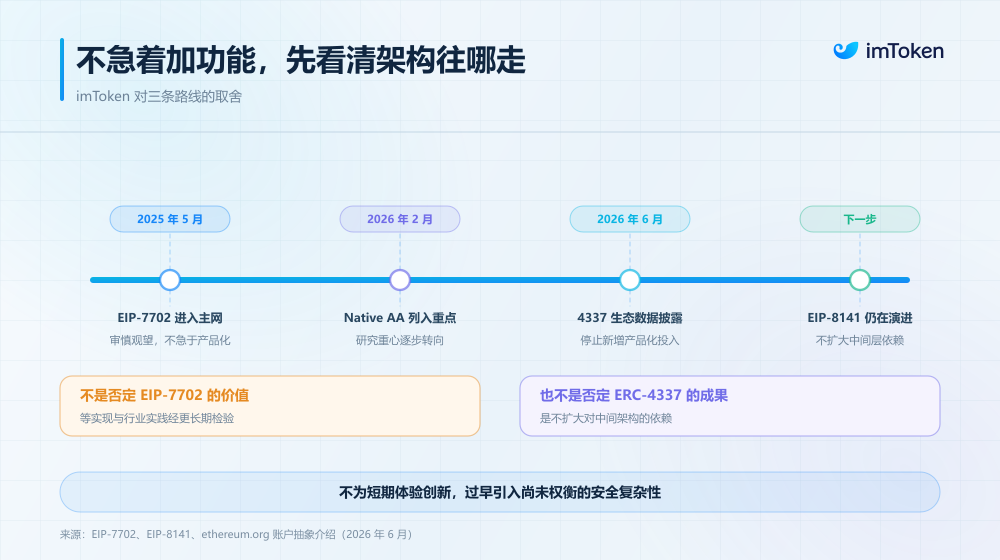
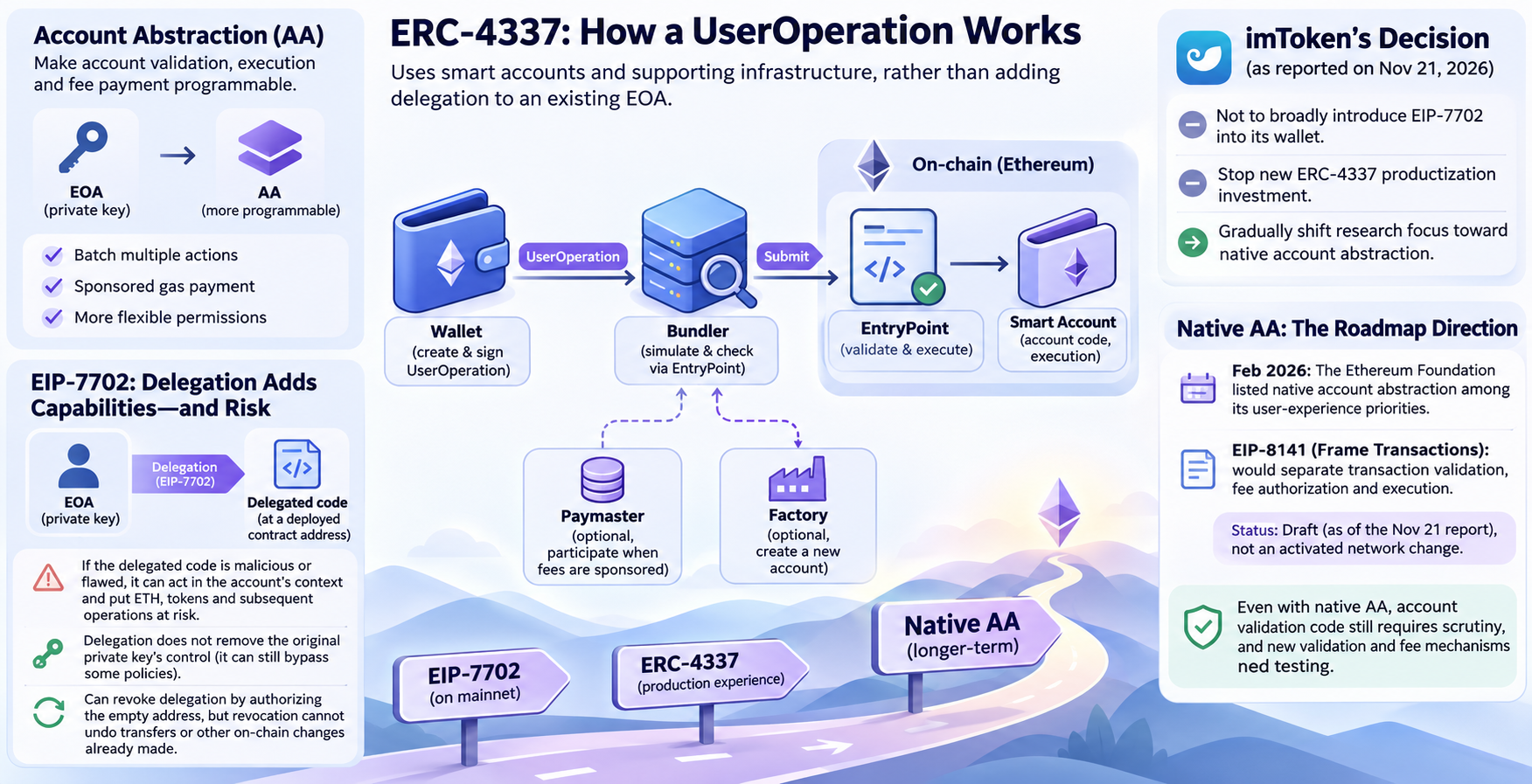
As reported on November 21, 2026, imToken had chosen not to broadly introduce EIP-7702 into its wallet, had stopped new ERC-4337 productization investment, and was gradually shifting its research focus toward native account abstraction. The distinction matters: EIP-7702 was already on Ethereum mainnet, while the native-account path discussed in the report remained a longer-term direction, not a deployed replacement.
The account problem—and the delegation risk
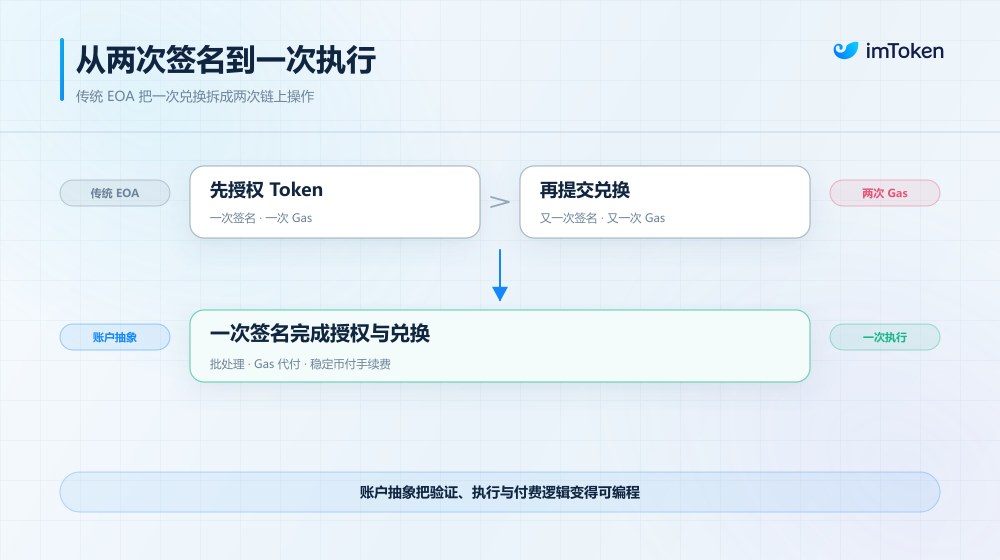
A conventional externally owned account (EOA) relies on its private key to authorize transactions. Account abstraction aims to make validation, execution and fee payment more programmable, potentially enabling batched actions, sponsored gas payments and more flexible permissions.
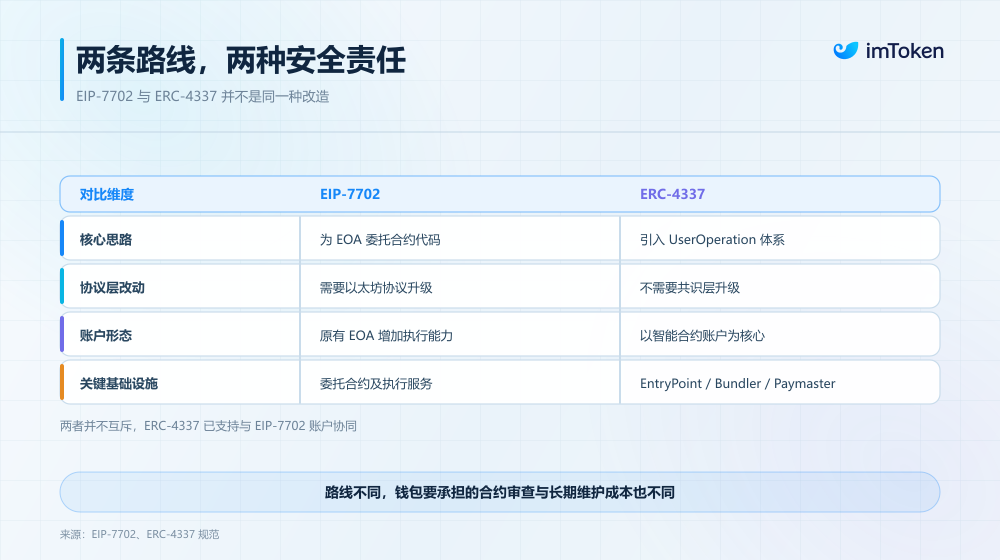
EIP-7702 lets an EOA authorize delegation to code at a deployed contract address. That can add capabilities such as batching, but it also changes the stakes of an authorization: if the delegated code is malicious or seriously flawed, its ability to act in the account’s context could put ETH, tokens and subsequent operations at risk. Unlike a typical token approval, the exposure need not be confined to one token and one approved spender—though an unlimited token approval can itself cause severe losses.
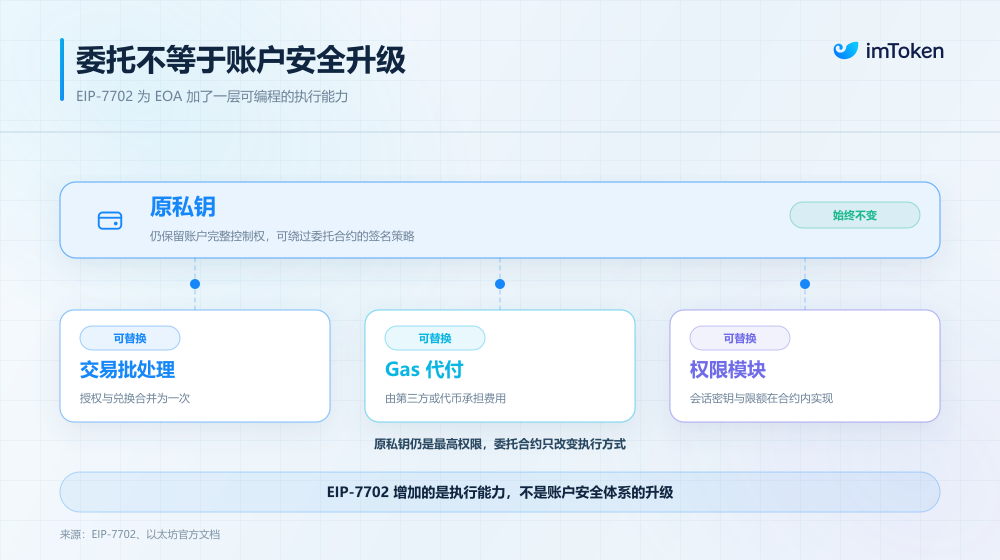
Delegation does not remove the original private key’s control of the EOA; that key can still bypass some policies implemented by delegated code. A user can revoke delegation by authorizing the empty address, but revocation cannot undo transfers or other on-chain changes already made. These are among the reasons imToken said it was waiting for more mature approaches to contract review, permission displays and recovery before a broad EIP-7702 rollout.
ERC-4337’s different maintenance burden
ERC-4337 uses smart accounts and supporting infrastructure rather than adding delegation to an existing EOA. A wallet signs a UserOperation; a Bundler checks it through EntryPoint simulation, then submits it to the on-chain EntryPoint for validation and execution. A Paymaster can participate when fees are sponsored, and a Factory may be involved when a new account is created.
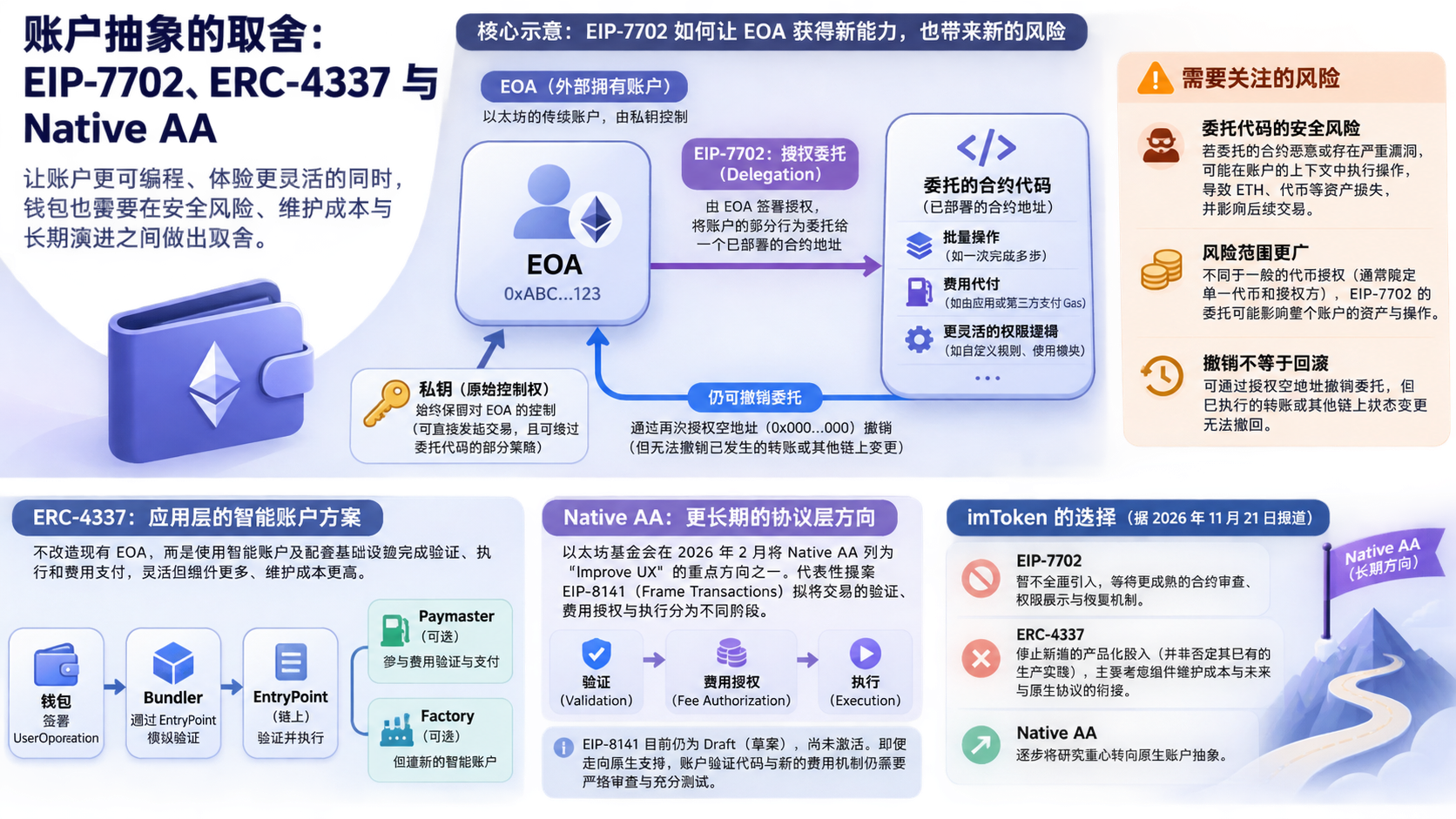
That flexibility brings choices about account code, signature checks, modules, EntryPoint versions and supporting services. According to imToken’s account of its decision, maintaining those components—and considering how existing accounts and permissions might later coexist with native protocol support—led it to stop additional ERC-4337 productization investment. The decision was not presented as a rejection of ERC-4337’s existing production experience.
Native AA remains a roadmap direction
The report said the Ethereum Foundation listed native account abstraction among its user-experience priorities in February 2026. One proposal it highlighted, EIP-8141 (Frame Transactions), would separate stages for transaction validation, fee authorization and execution. As of the November 21 report, EIP-8141 was still a Draft, not an activated network change.
Moving account capabilities closer to the protocol would not eliminate security work: account validation code would still require scrutiny, and new validation and fee mechanisms would need testing. For imToken, the immediate choice was therefore about where to concentrate future research—not a claim that native AA had already solved the wallet risks exposed by existing approaches.