Tokenized securities, bankruptcy and accounting oversight were on the agenda for a virtual meeting of the U.S. Securities and Exchange Commission’s Investor Advisory Committee, according to a report published at 10:35 EST on November 25, 2026. The meeting date was unclear: the headline listed December 3, while the article gave December 4.
The report named committee members Andrew Park and John Gulliver as moderators of the tokenization discussion and listed panelists from Coinbase, BlackRock, Robinhood, Nasdaq, Citadel Securities and Galaxy Digital.
What does the token holder own?
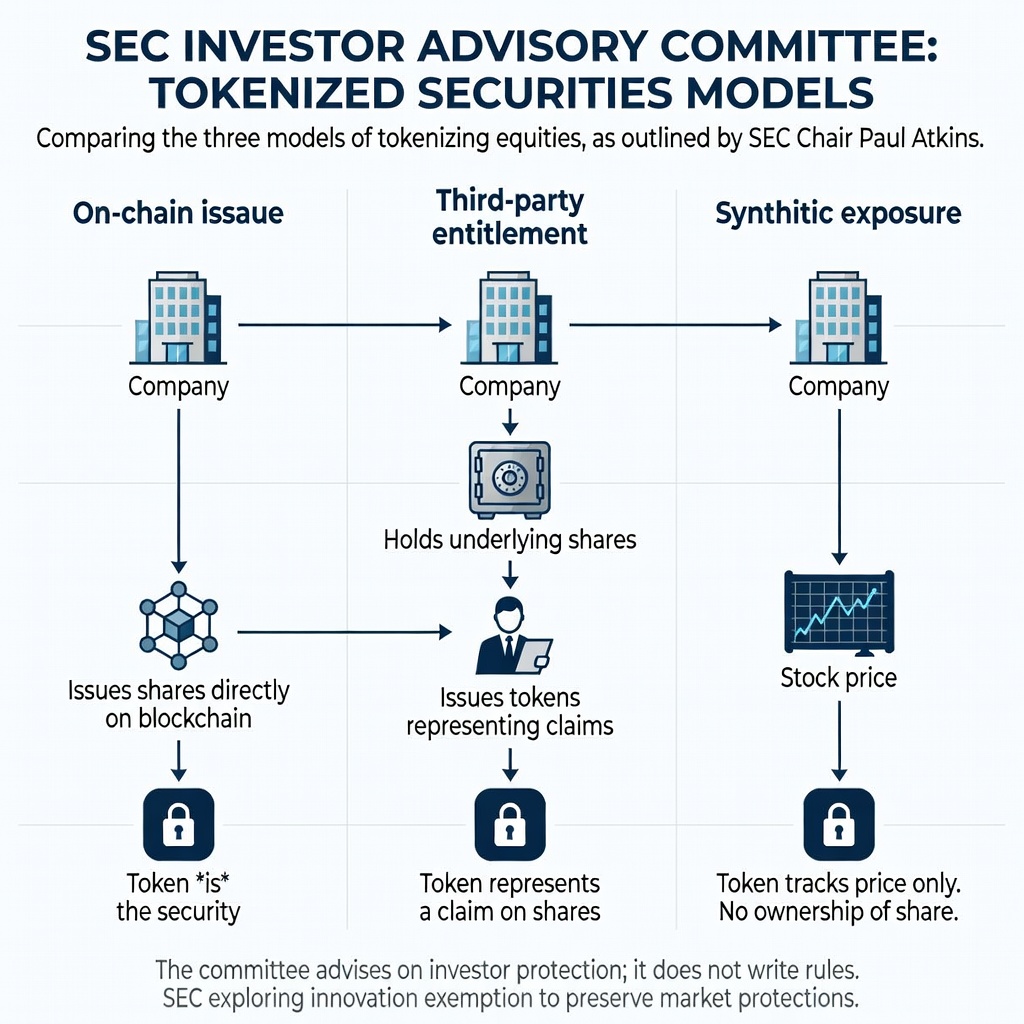
SEC Chair Paul Atkins has distinguished three models for tokenizing equities. The key difference is whether the token is a share, represents a claim on a share or simply tracks its price.
- On-chain issuance: The company issues its shares directly on a blockchain. The token itself is the security.
- Third-party entitlements: A party other than the issuer holds the underlying shares and issues tokens that represent claims on them.
- Synthetic exposure: The token tracks the stock’s price but gives its holder no ownership of the underlying share.
Atkins has cited faster settlement, less reliance on intermediaries and greater transparency in how companies engage with shareholders as potential benefits of tokenization.
The committee advises the Commission on investor protection; it does not write rules. Atkins has said the SEC is committed to developing an innovation exemption that would preserve existing market protections rather than offer broad regulatory relief. He described an exemption under development, not one already in force.