Published November 25, 2026, at 22:19:03 (UTC+08:00).
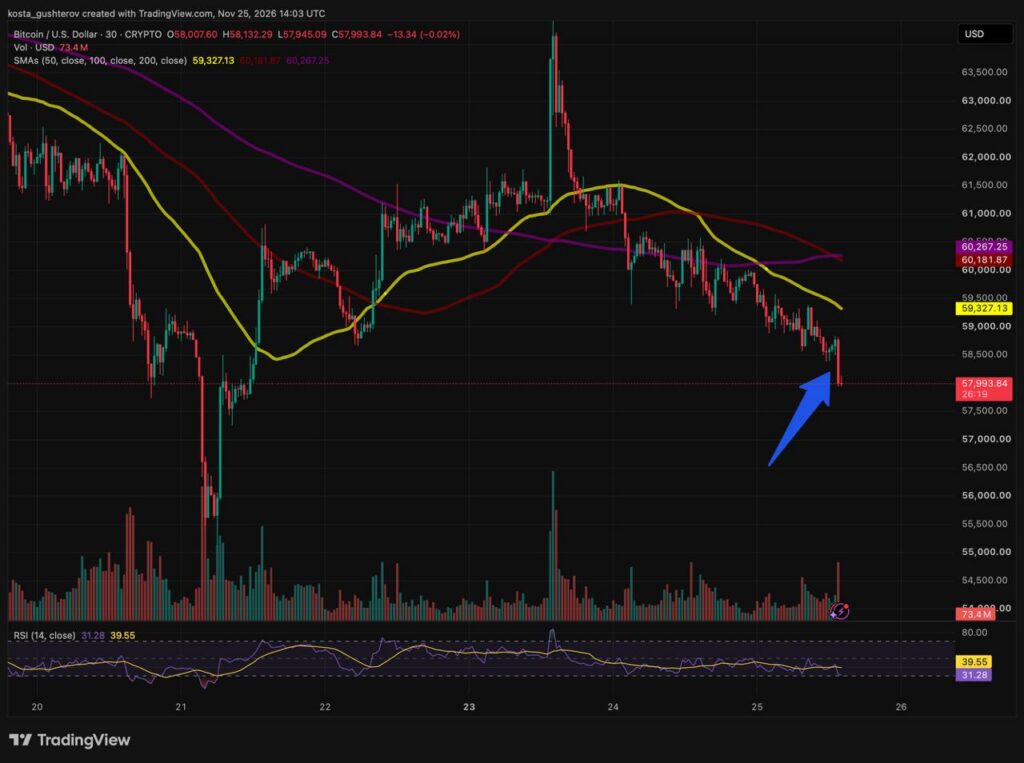
Bitcoin traded as low as $57,945 on November 25, extending a decline already underway when the US Bureau of Economic Analysis (BEA) released its October personal income and outlays report at 8:30 a.m. ET (13:30 UTC). The report showed that households had more purchasing power but spent slightly less: inflation-adjusted disposable income rose 0.5%, real consumer spending fell less than 0.1%, and the saving rate climbed to 4.1%.
On TradingView’s 30-minute BTC/USD chart, bitcoin fell from about $58,800 to just above $58,000 in the half hour after the release, on some of the session’s heaviest volume. It subsequently broke below $58,000 and traded near $57,994 at publication, below its 50-, 100- and 200-period moving averages. Its relative strength index stood at 31, just above the conventional oversold threshold of 30.
The decline had begun after a November 23 spike above $63,500. Investors withdrew $569.7 million from spot bitcoin exchange-traded funds that Monday, following a weekend drop to $55,130. The timing of the November 25 move alone does not establish that the inflation figures caused it.
One inflation figure exceeded forecasts
| October PCE price measure | Reported | Consensus forecast |
|---|---|---|
| Headline, monthly | 0.3% | 0.3% |
| Headline, annual | 3.8% | 3.8% |
| Core, monthly | 0.3% | 0.3% |
| Core, annual | 3.3% | 3.2% |
The annual core reading was the only figure above forecast. The monthly increase remained at September’s 0.3% pace. The distinction matters because a smaller increase of 0.2% in October 2025 dropped out of the 12-month calculation. BEA had to estimate some prices for that earlier month after a government shutdown interrupted data collection.
Morningstar calculated the unrounded October 2026 core increase at 0.29%. If sustained for a year, that pace would compound to roughly 3.5%, above the Federal Reserve’s 2% target. Before the release, Bitwise noted that fed funds futures already implied a 93% probability of a December rate increase. Futures put the probability of increases in both December and January at 63%; neither decision had been made.

Where the additional income went
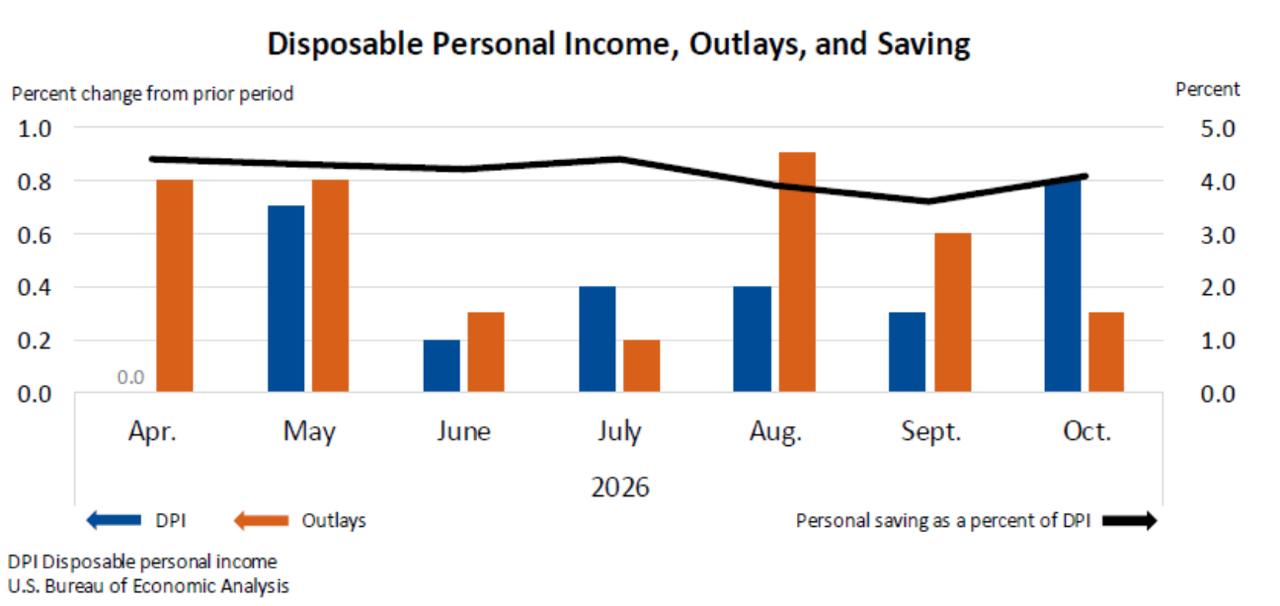
Personal income rose $201.8 billion, or 0.7%, while disposable income rose $200.5 billion, or 0.8%, before inflation. The dollar changes are expressed at seasonally adjusted annual rates, not as cash received in a single month. Compensation led the gain, with dividends and government social benefits also contributing. The 0.5% rise in real disposable income reversed September’s 0.2% decline.
A one-time Medicare Part B premium rebate of $90 went to about 20.8 million beneficiaries, roughly $1.87 billion in total. Coindoo calculated that this amounted to about $22 billion at BEA’s annual rate, around a tenth of the disposable-income gain. Without the rebate, nominal disposable income would still have risen about 0.7%.
Consumer spending rose $63.8 billion, or 0.3%, before inflation, with services up $52.1 billion and goods up $11.8 billion. After inflation, spending fell $5.8 billion. BEA figures available through the St. Louis Fed’s FRED database showed that real goods spending fell about $13 billion, or 0.2%, while real services spending held up.
The gap between income and spending growth was the widest since at least April. Personal saving reached $1.00 trillion at an annual rate, and the saving rate rose from a revised 3.6% in September to 4.1% in October. The Medicare rebate accounted for roughly a tenth of a percentage point of that half-point rise.

The spending question ahead of the Fed meeting
The October figures followed a stronger summer. On November 25, BEA also revised third-quarter economic growth from an initial 3.4% annualized rate to 4.3%. Final sales to private domestic purchasers, a measure of household and business demand, grew 5.8%. Yet real consumer spending rose just 0.1% in September after revisions, then edged lower in October. Two months do not establish a trend, but both readings qualify the Fed’s October 28 assessment that “domestic spending has been resilient.”
The Fed raised its policy rate in September for the first time since 2023, to a range of 3.75%–4.00%. It held that range on October 28, with Governor Lisa Cook and Cleveland Fed President Beth Hammack dissenting in favor of another quarter-point increase. Minutes of the October meeting signaled the possibility of more than one further increase.
Earlier in November, expectations had shifted sharply. On November 5, chip stocks recorded their second-biggest fall on record and bitcoin fell about 5% in the same session. CME FedWatch showed the implied probability of a December hike falling from 82% to 67%, while Reuters reported that rates traders had pushed the expected timing of the next increase back to March. Strong October jobs and consumer price figures reversed that shift within a week.
Crypto research desks differed on what mattered for bitcoin. Grayscale research head Zach Pandl called September’s hike a “mid-cycle adjustment, not a cyclical change,” arguing that one or two increases in 2026 would do little to alter capital allocation. Bitwise identified rate-hike expectations as the main driver of weak crypto sentiment: only four of its 15 indicators were positive, putting its tracker at one of its three weakest readings since the FTX collapse.
QCP Capital’s November 23 note attributed the weekend decline mostly to hedging against broader market risk, amplified by thin liquidity. Its tests for a lasting recovery included consistently positive ETF flows, bitcoin holding up during US trading hours rather than only in Asia, stabilizing technology stocks and implied volatility below 40. The ETF withdrawals and renewed US-morning selling meant the first two conditions were not yet in place on November 25.
US stock markets were scheduled to close for Thanksgiving on November 26, when spot bitcoin ETFs would not trade. The Fed’s next decision and updated rate projections were due December 9; BEA’s November income and spending report was not due until December 23. That left October as the last PCE reading before the vote, making the Fed’s description of household spending worth watching alongside the rate decision itself.