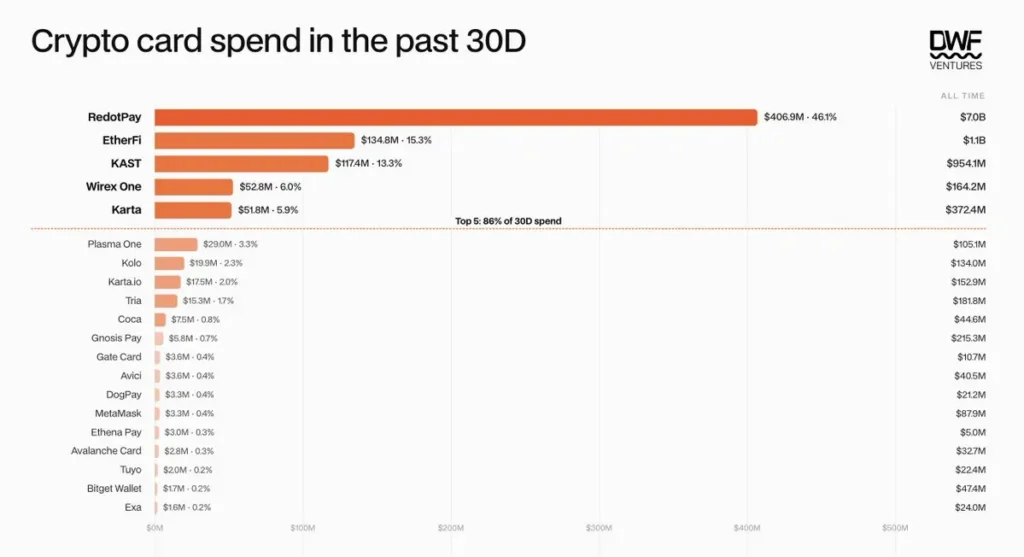
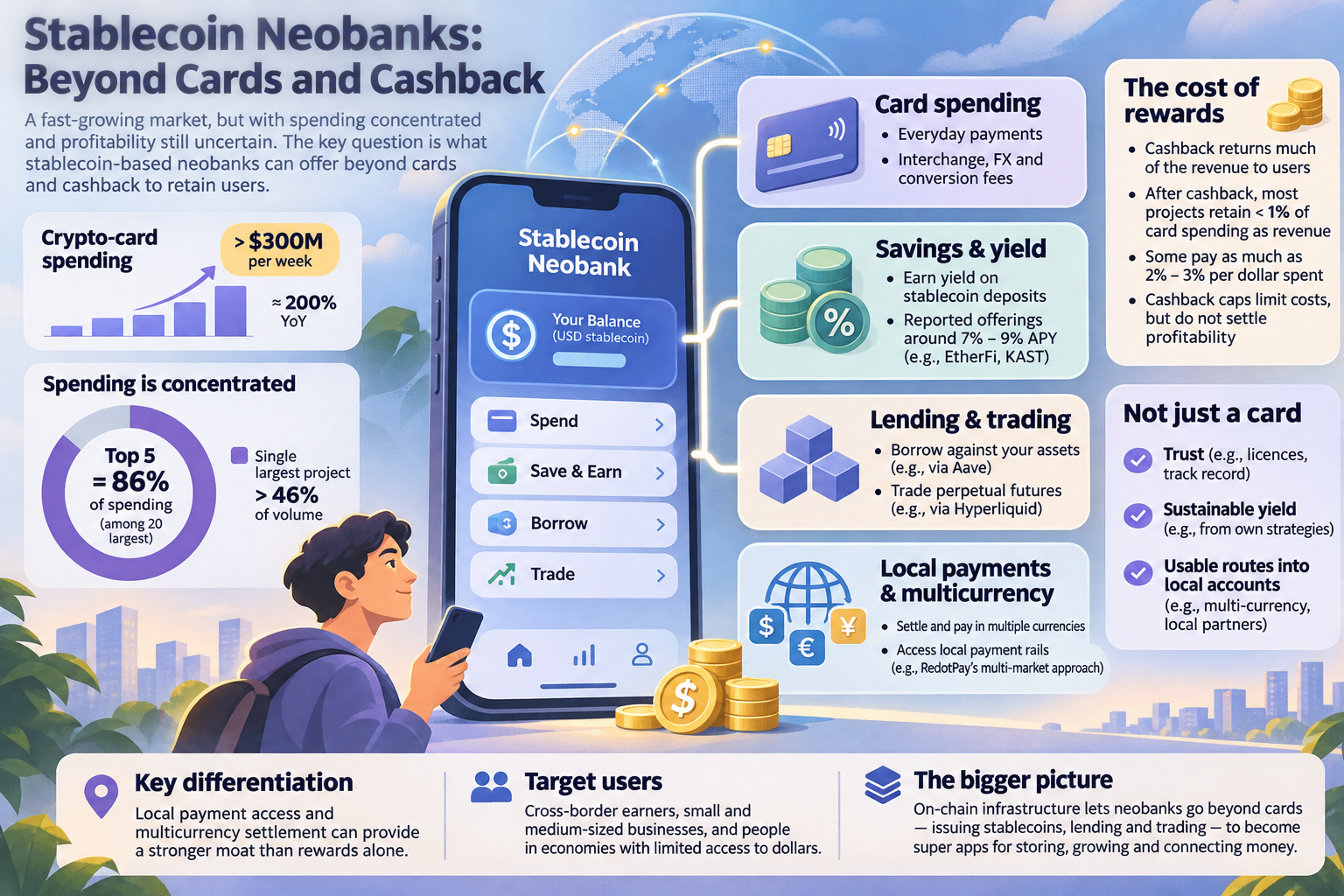
A DWF Ventures report published on November 24, 2026 describes a fast-growing crypto-card market in which spending is concentrated and profitability remains uncertain. Its central question is what stablecoin-based neobanks can offer beyond cards and cashback—not whether an Ethereum protocol change is underway.
Spending is growing, but concentrated
Weekly crypto-card spending exceeded $300 million, up nearly 200% year over year, according to the report. Among the 20 largest card projects, the top five accounted for 86% of spending over the preceding 30 days; RedotPay alone represented more than 46% of volume. The figures draw on information available through PaymentScan, and the report cautions that metrics for some other card projects are not public.
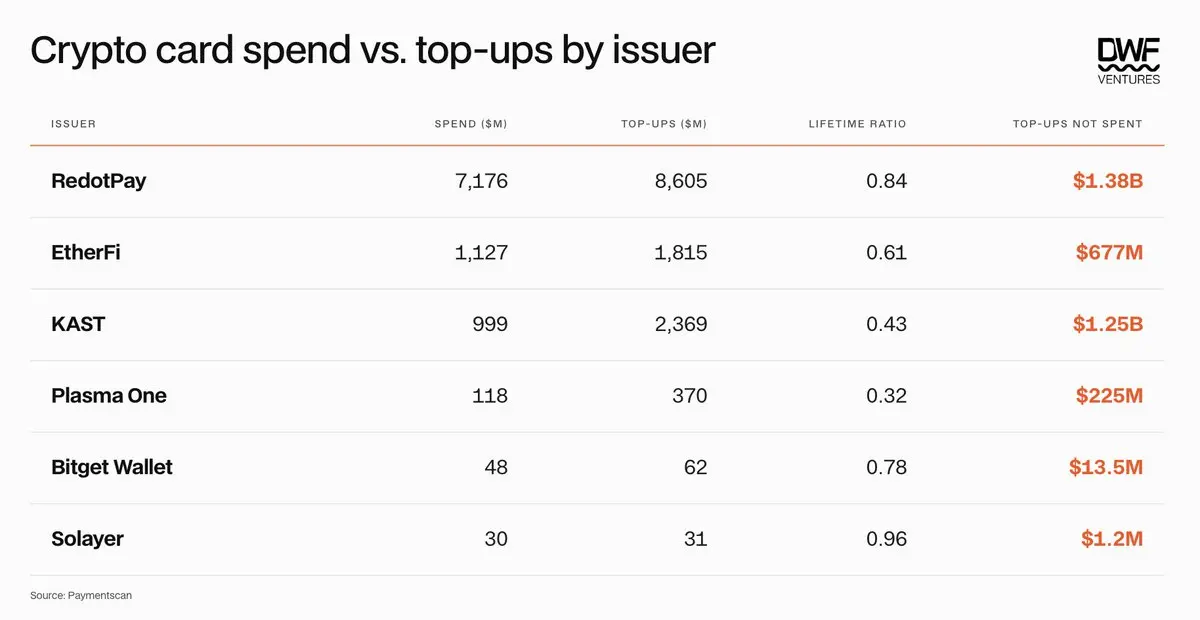
Card use tells only part of the story. The report estimates that users spend $0.65–$0.75 for every dollar they deposit, suggesting they also use these apps to hold funds. It cites EtherFi and KAST as examples of projects offering 7–9% annual percentage yields on dollar-stablecoin deposits. Those yields are reported offerings, not guaranteed returns.
The cost of competing on rewards
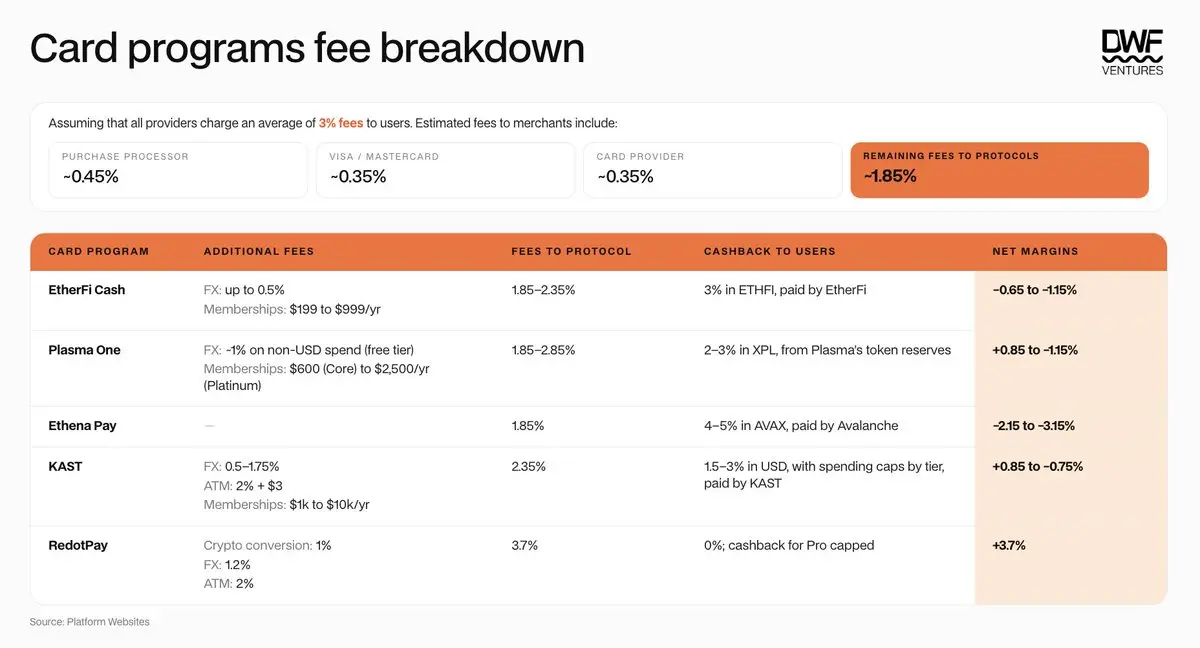
The report identifies interchange, foreign-exchange and crypto-conversion fees, and fees for converting crypto into local currency as card-project revenue sources. But cashback returns much of that revenue to users. After cashback, it says, most projects retain less than 1% of card spending as revenue, while some pay as much as 2–3% per dollar spent. Cashback caps limit that acquisition cost, but do not settle the profitability question.
DWF Ventures argues that local payment access and multicurrency settlement may provide stronger differentiation. It says most card spending settles in dollars, leaving users spending in other currencies exposed to foreign-exchange fees of 0.5–2%. It presents RedotPay as an exception to rewards-led competition, citing its licences in Hong Kong, the United States, Canada and Argentina, and local-partner support for payments in more than 35 currencies.
Beyond the card
The report outlines several ways apps are testing services built around balances they already hold. KAST issues a stablecoin through M0, while EtherFi has introduced ether.fi USD through Ethena. Using approximately $48 million in idle EtherFi user deposits and an assumed 4% yield, the report calculates roughly $2 million in potential annual income; that figure is a projection, not reported earnings.
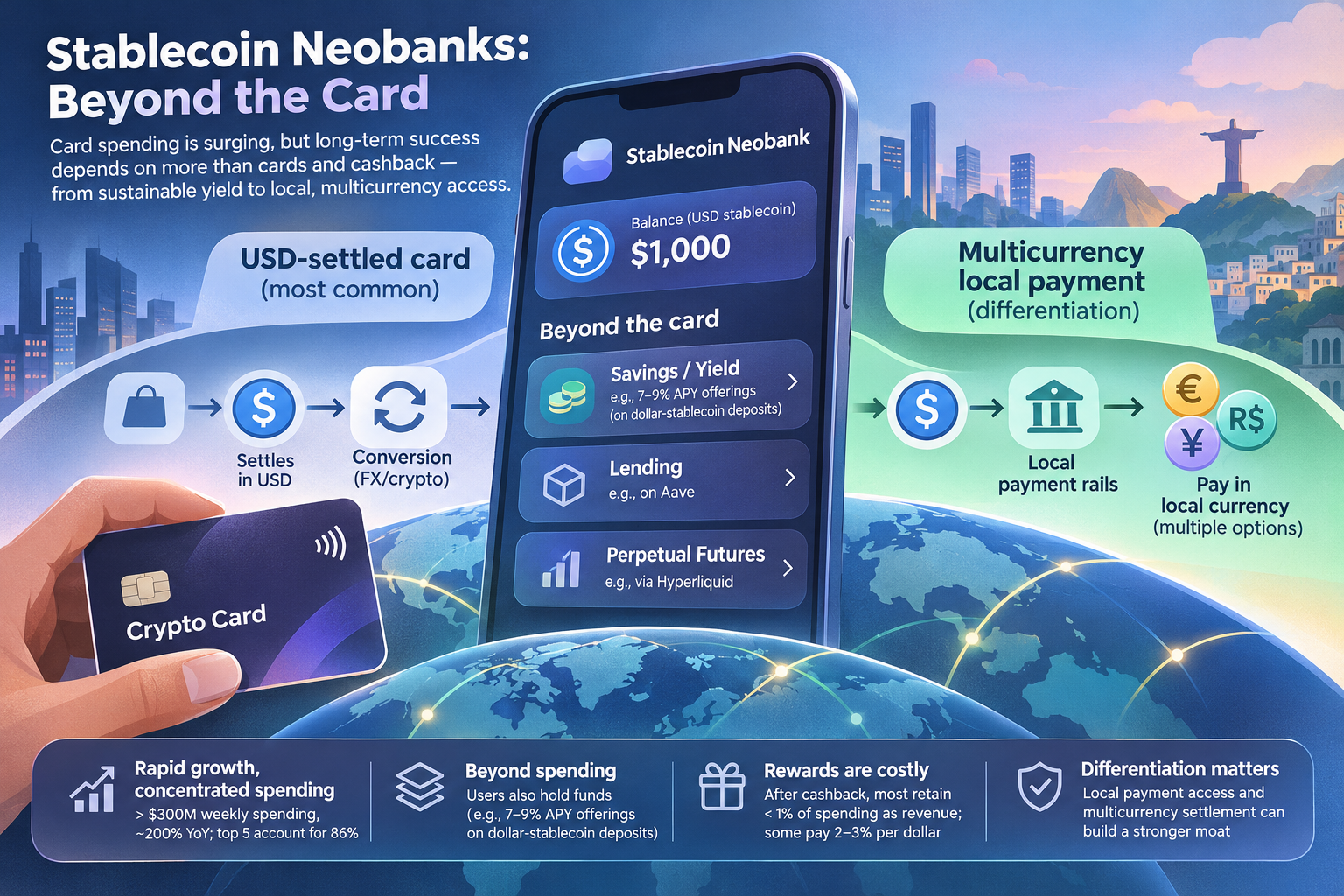
It also cites ether.fi Cash’s lending operation on an Aave V4 instance, with more than $47 million in loans, and Phantom’s perpetual-futures feature through Hyperliquid. Phantom had earned more than $20 million in builder fees since that feature launched, according to the report.
These examples concern applications and their use of on-chain infrastructure, not an EIP, ERC or activated Ethereum upgrade. The report’s broader argument is that trust, sustainable yield and usable routes into local accounts—not card issuance alone—will determine whether stablecoin neobanks can retain users.