
Originally reported November 12, 2026, at 11:42 a.m. UTC+8. Nonprofit Ethereum research lab Ethlabs posted its pqai27 community proposal, calling for 2027 to become a target year for quantum and AI resilience. It is a proposed roadmap, not an approved protocol upgrade. Changes to fork scope or consensus would still require discussion and agreement among Ethereum core developers.
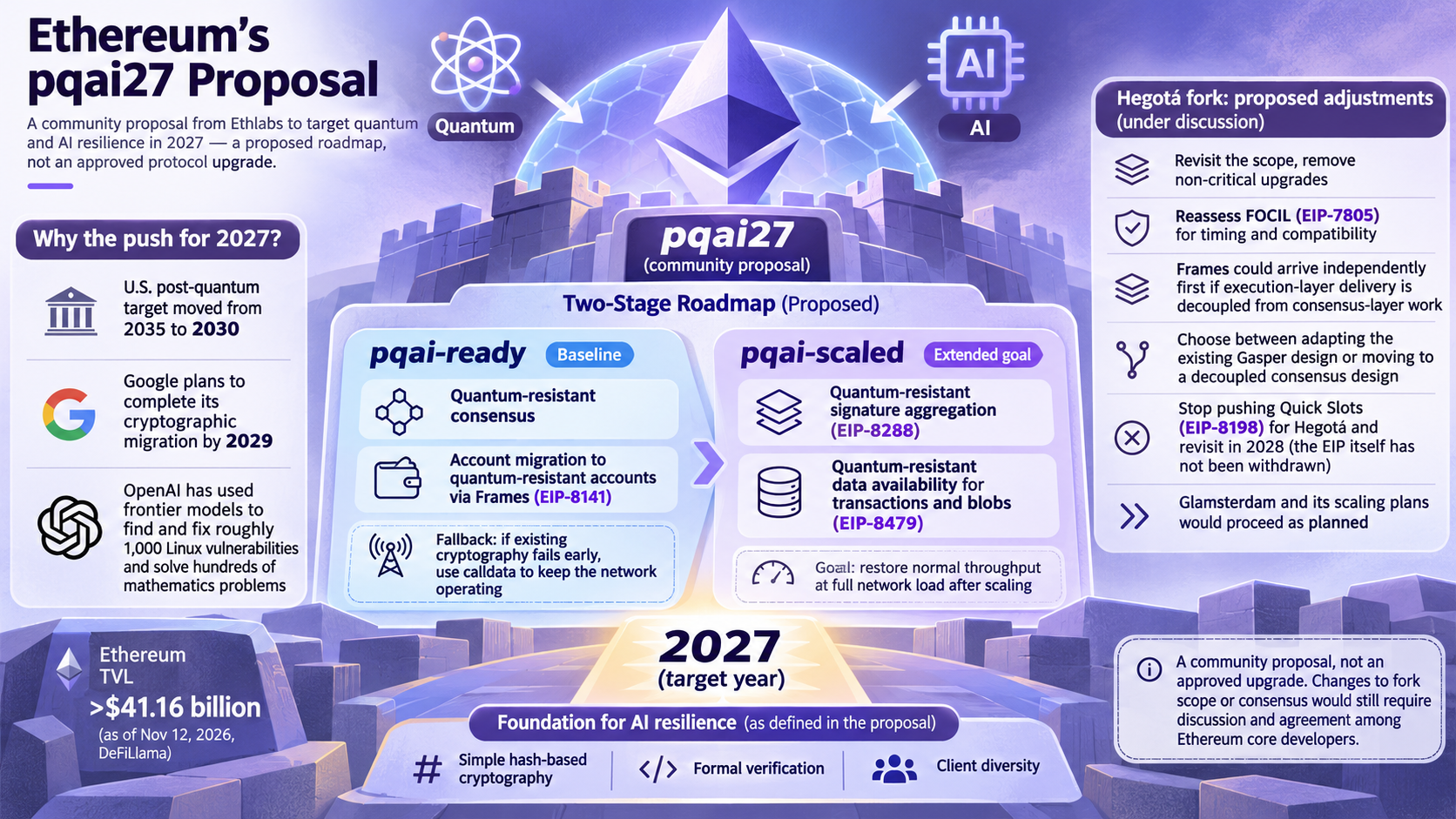
Why Ethlabs is proposing the target
Ethlabs argues that the time available to prepare is shrinking. The original report says the US government moved a post-quantum target from 2035 to 2030, while Google planned to complete its cryptographic migration by 2029. It also cites OpenAI’s use of frontier models to find and fix roughly 1,000 Linux vulnerabilities and solve hundreds of mathematics problems. In the proposal, “AI resilience” means strengthening underlying defenses through simple hash-based cryptography, formal verification and client diversity—not a claim that Ethereum has already suffered an AI-driven attack.
For context, the report cites DeFiLlama data putting Ethereum’s total value locked above $41.16 billion as of November 12, 2026.
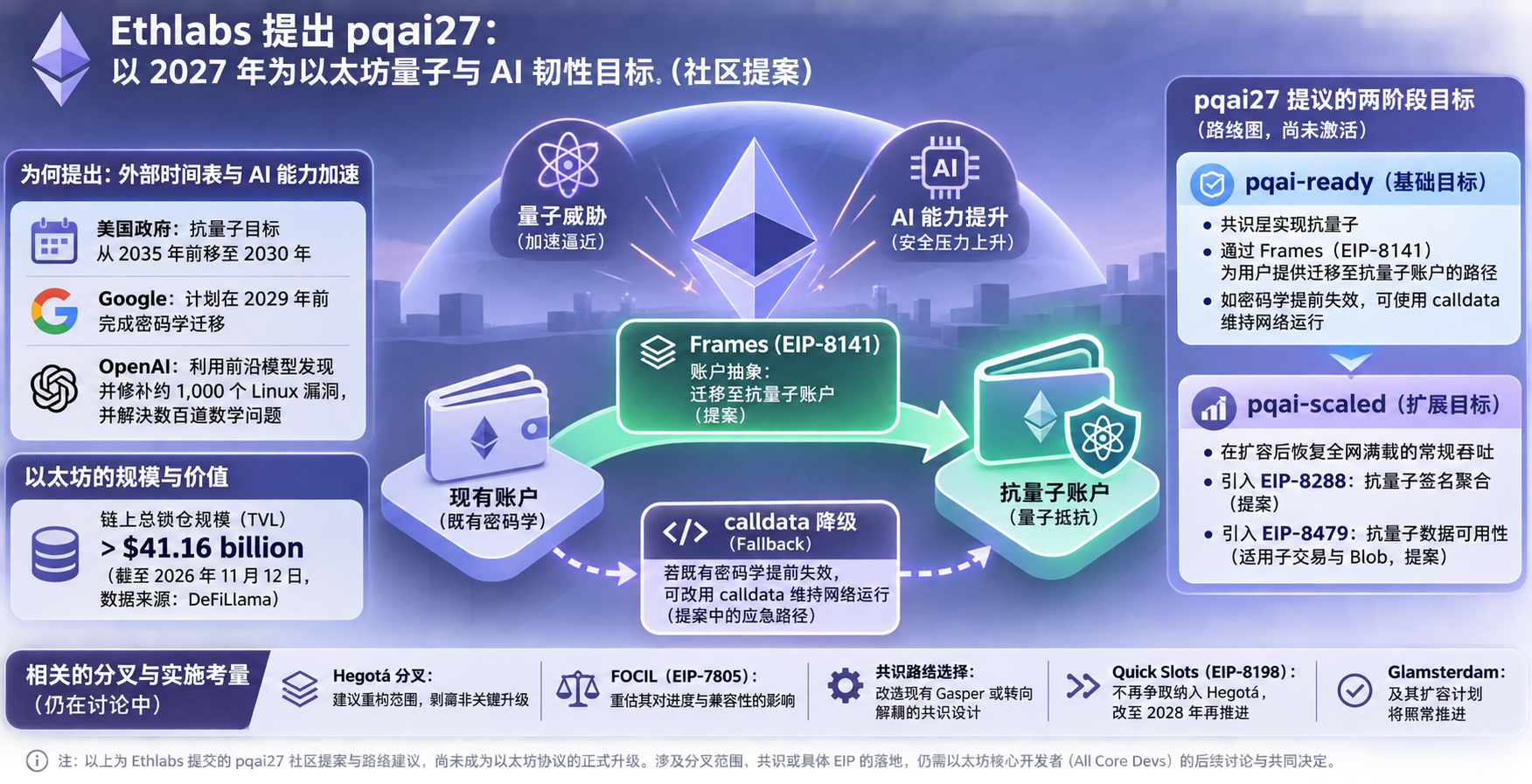
A baseline, then a scaling goal
The proposed “pqai-ready” baseline calls for quantum-resistant consensus and a path for users to move to quantum-resistant accounts through the Frames account-abstraction proposal, EIP-8141. If existing cryptography failed early, the proposal envisages a fallback to calldata to keep the network operating.
The further “pqai-scaled” goal aims to restore normal throughput at full network load after scaling. It proposes quantum-resistant signature aggregation through EIP-8288 and quantum-resistant data availability through EIP-8479 for transactions and blobs. These are proposed components, not activated features.
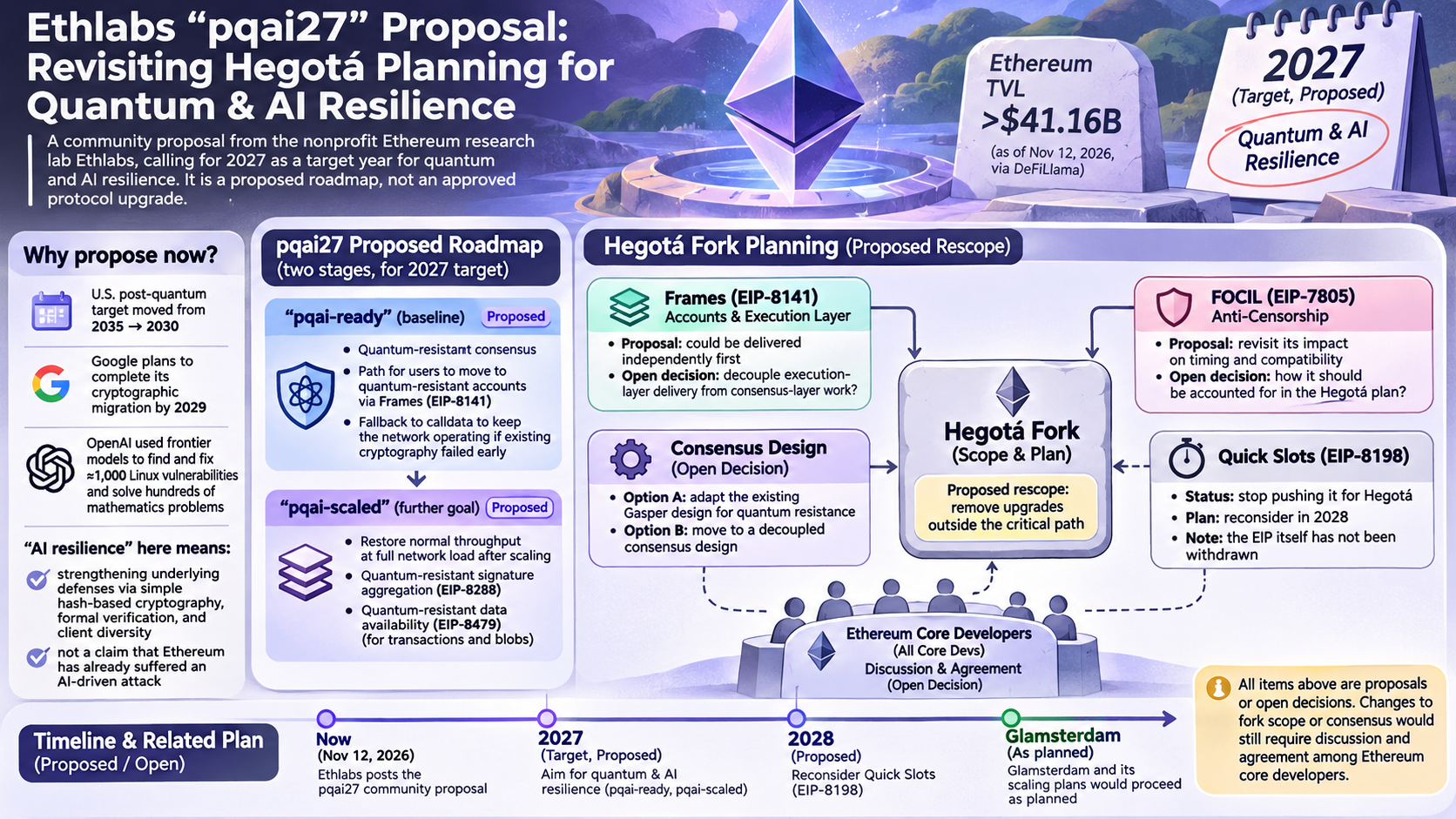
What could change in the fork plan
Ethlabs suggests revisiting the scope of the Hegotá fork, removing upgrades outside the critical path and reassessing how the anti-censorship proposal FOCIL (EIP-7805) might affect timing and compatibility. Frames could arrive independently first if execution-layer delivery were decoupled from consensus-layer work. Developers would also need to choose between adapting the existing Gasper consensus design and moving to a decoupled consensus design.
Ethlabs said it would stop pushing Quick Slots (EIP-8198) for Hegotá and revisit it in 2028. That does not mean the EIP itself has been withdrawn. The report says Glamsterdam and its scaling plans would proceed as planned. None of the proposed Hegotá changes had been settled in the original reporting.
Source: techflowpost.com (originally published 2026-11-12 11:42 UTC+8)